
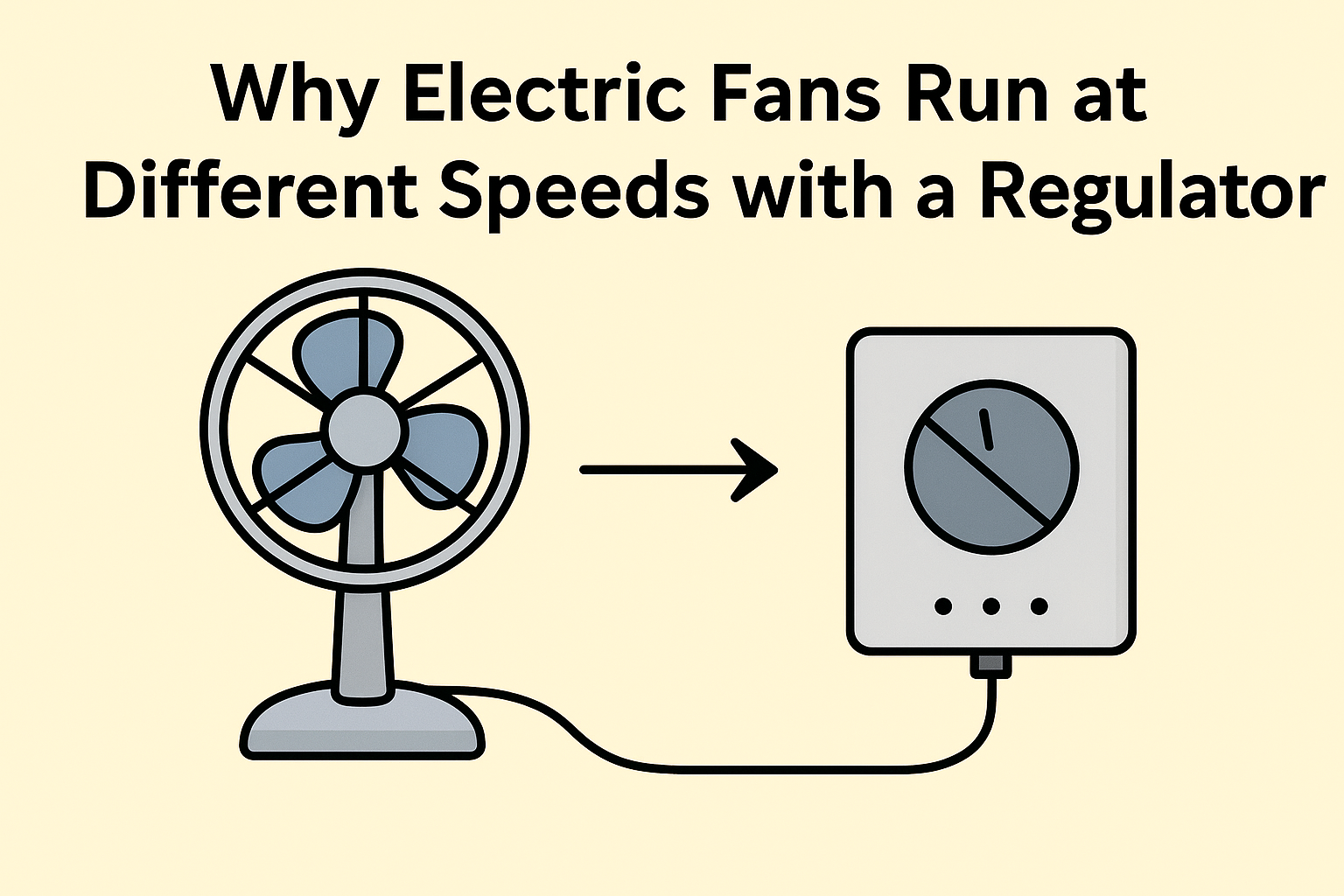
Electric fans run at different speeds with the help of a device called a fan regulator, which controls the amount of voltage or current supplied to the fan’s motor. The motor of a fan works on the principle of electromagnetic induction—its speed depends directly on the supply voltage and the current flowing through it.
In older models, regulators were resistive in nature. They reduced the voltage reaching the fan by dissipating extra energy in the form of heat through resistors. Although simple, this method wasted energy. That’s why traditional regulators often became hot during operation.
Modern fans generally use electronic regulators, which work with capacitors or electronic circuits to regulate the voltage more efficiently. Instead of wasting power as heat, they adjust the phase angle of the current supplied to the motor. This allows smoother speed control, less energy consumption, and increased durability of the fan.
When you rotate the regulator knob, you are essentially changing how much power is being delivered to the fan’s motor. At higher settings, the motor receives more current, spins faster, and produces more airflow. At lower settings, the current is reduced, so the motor rotates slowly, providing gentle airflow.
In short, the fan regulator acts like a speed controller—regulating the motor’s input and letting us enjoy comfort at different cooling levels without directly changing the electricity supply.